Start with the surfaces customers and occupants actually see
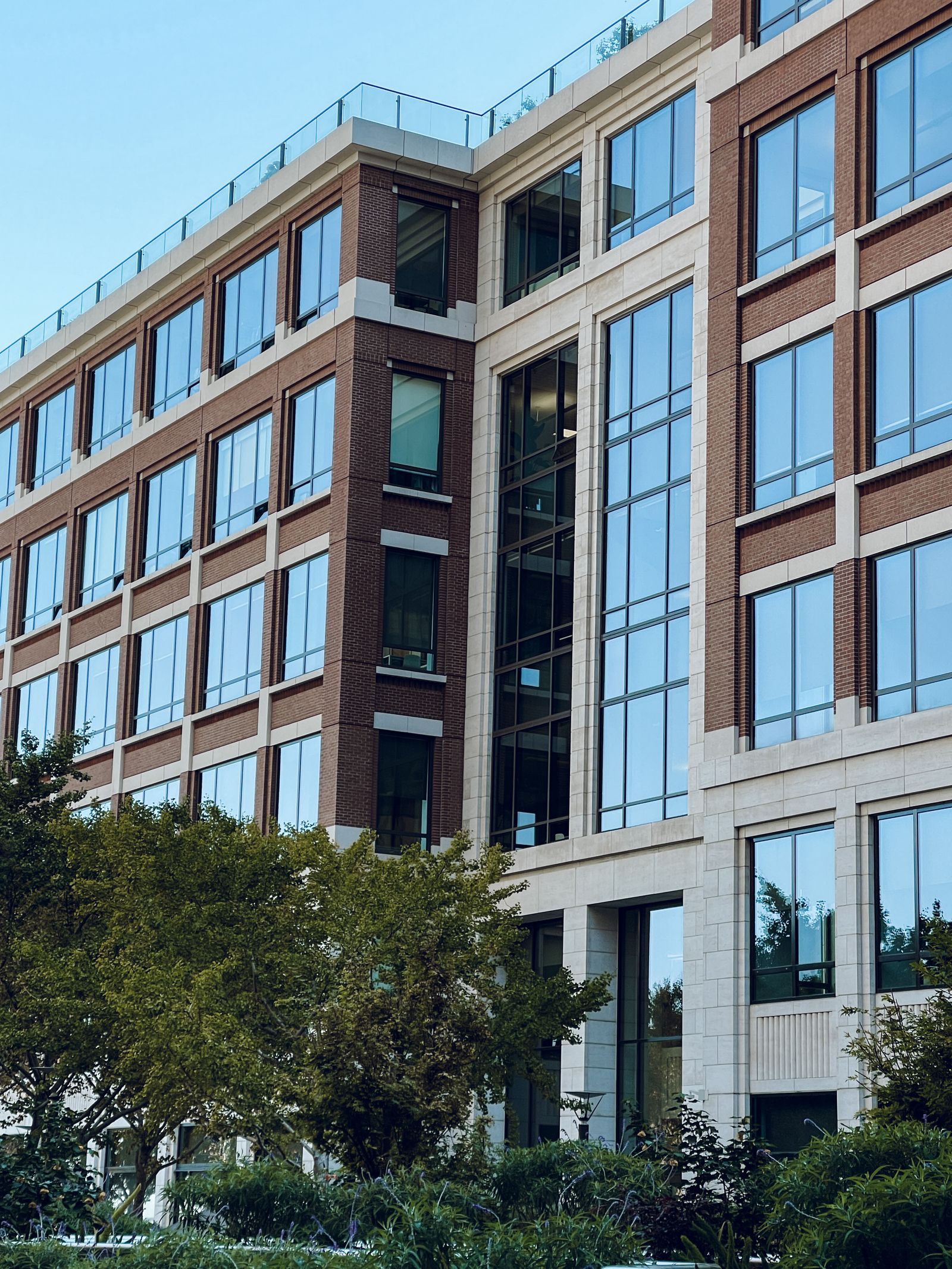
A useful maintenance plan begins at normal viewing distance. Dark organic streaking on a shaded brick elevation, traffic film on a street-facing facade, runoff marks below coping, grime on a canopy fascia, and loose residue on an upper glass band are different conditions. They may not need the same chemistry, agitation, pressure, or access. During the quote process, the property team can identify priority elevations, entrance moments, tenant concerns, past cleaning results, and the appearance it wants to maintain. Drone Building Cleaners then separates routine washable soil from mineral deposits, oxidation, paint, efflorescence, sealant transfer, biological growth, or restoration conditions that need testing or a specialty trade.
The service can cover one commercial property or a portfolio, but every building keeps its own material and access record. A glass-and-metal office near K Street has different finish expectations from a brick mixed-use building on H Street NE, a hotel near the convention center, or a masonry storefront in Georgetown. The proposal should name the included facade zones and the intended result for each one. Upper glass rinsing, for example, can reduce loose atmospheric soil but does not provide scraping, squeegee detailing, hard-water restoration, or close contact work. Stating that limit before scheduling protects the buyer from paying for a process that cannot produce the expected finish.
- Facade soft washing for compatible brick, masonry, EIFS, stucco, precast, and coated surfaces
- Controlled rinsing for suitable upper glass, frames, ledges, and window bands
- Targeted cleaning of parapets, roofline trim, canopies, sign bands, and entrance structures
- Ground-level detailing or a separate contact-access recommendation where remote application is insufficient
Set the cadence by exposure instead of applying one calendar to every wall
Washington buildings rarely soil evenly. A north-facing wall can hold moisture longer, a tree-lined frontage may collect organic debris, a loading elevation can receive exhaust and handling grime, and a busy entrance can show splashback much sooner than an upper setback. Construction activity, restaurant exhaust, rooftop drainage, bird activity, shade, and the profile of projecting stone or metal also change the rate of resoiling. A recurring program can therefore place the visible street facade and entrance on a different cycle from protected courtyards or less prominent service elevations.
The first completed visit creates better evidence than a preset quarterly or annual sales package. Before-and-after photographs, notes on remaining bonded stains, drying behavior, access conflicts, and the time each work zone stays presentable can guide the next interval. Some properties may benefit from a seasonal rinse and a deeper annual wash. Others may need targeted entrance and canopy care more often while broad elevations remain on a longer cycle. Drone Building Cleaners can quote an initial service with a recommended review point, then refine the maintenance schedule with the property rather than guaranteeing that one frequency fits every Washington building.
Plan around Washington's distinct commercial operating patterns
The District's Center City includes traditional Downtown, Southwest, West End, Penn Quarter, Mount Vernon Triangle, NoMa, and Capitol Riverfront, among other employment and mixed-use areas identified by the DC Office of Planning. Those names help describe likely operating contexts, not automatic service conditions. Downtown office entrances can face weekday pedestrian peaks and curb restrictions. Penn Quarter properties may coordinate around restaurants, entertainment, and events. NoMa and Capitol Riverfront sites can combine residential occupancy, retail frontage, garage access, loading, and construction. Georgetown may add narrow access, historic materials, retail deliveries, and heavily used sidewalks.
A quote should be based on the property calendar. Facility managers can share tenant arrival periods, hotel check-in patterns, retail opening times, deliveries, trash collection, valet movement, garage peaks, events, and any security or access protocol. Work may be divided by elevation, floor band, or entrance zone so the property remains usable. The plan should preserve accessible routes and emergency access, identify who can pause the work, and state how schedule changes will be communicated. No fixed response or completion time is promised because weather, permissions, material tests, public-space needs, and current site conditions can change when a zone is workable.
Choose access honestly in the nation's most restricted drone environment
The FAA states that the Washington Special Flight Rules Area has a 15-mile inner ring where unmanned-aircraft operations are prohibited without specific FAA authorization. It also explains that experienced Part 107 or public-aircraft operators with justification can use the online Access Program and that additional TSA and FAA approvals are required. A normal commercial-drone credential or a property's permission does not, by itself, make a Washington address available for drone cleaning. Current airspace, security instructions, facility restrictions, authorization status, and the exact operation must be reviewed before drone assistance appears in a final method.
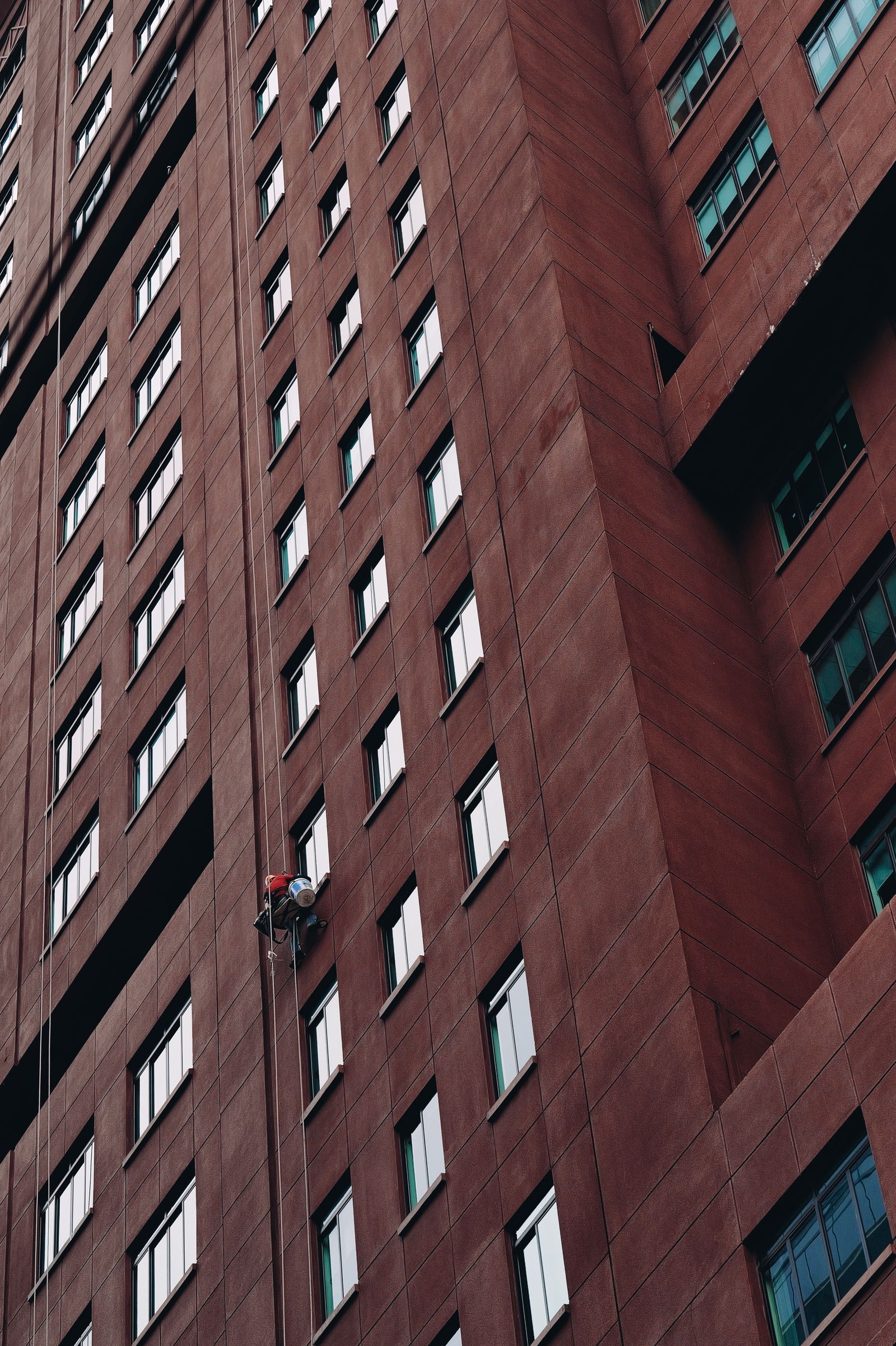
That restriction does not prevent Drone Building Cleaners from evaluating and coordinating an exterior-cleaning project. It means the quote needs an access decision rather than a drone assumption. Ground-applied soft washing, water-fed poles, lifts, approved roof or suspended access, and hand detailing may serve all or part of the scope. A broad compatible facade with a legally authorized operating plan may support drone-assisted wetting or rinsing; a recessed courtyard, covered entrance, detailed glass, protected government setting, or contact-cleaning task may not. The customer receives a surface-by-surface recommendation so the result, disruption, and legal operating conditions can be compared before mobilization.
- Property approval is not a substitute for FAA or other required authorization.
- Drone assistance is excluded when authorization, airspace, visibility, weather, or ground control is unsuitable.
- Contact cleaning remains necessary for scraping, agitation, restoration, and detailed glass finishes.
- A hybrid scope can use different approved methods on different elevations.
Protect sidewalks, entrances, landscaping, and the water path
Many District building faces meet public space almost immediately. DDOT defines public space as publicly owned property between street property lines, including roadways, tree spaces, sidewalks, and alleys, and states that use of public space requires a permit where applicable. A lift position, equipment area, hose route, curb occupancy, pedestrian detour, or controlled work zone may therefore need review through the property's permitting and traffic-control process. The exact requirement depends on the proposed setup. Drone Building Cleaners can provide operating details for the quote, while the responsible parties identify and obtain required permissions before work.
Water needs the same advance attention. DOEE distinguishes the District's combined sewer and municipal separate storm sewer systems and identifies soapy water from washing buildings or awnings as an example of pollution that should be reported when it enters the wrong path. Its operational-facility guidance says wash water can be a pollutant and warns against allowing pollutants into the MS4 or directly into waterways. The site walk should locate roof drains, scuppers, trench drains, curb inlets, planted areas, doorways, and low points. Chemistry, removed soil, rinse volume, collection controls, and a suitable disposition route must be considered for the actual property rather than assuming every nearby drain is acceptable.
Treat historic and sensitive materials as a separate decision
Washington contains numerous historic districts, including Downtown, Dupont Circle, Georgetown, Capitol Hill, Financial, Mount Vernon Square, Mount Vernon Triangle, Pennsylvania Avenue, Shaw, U Street, and Union Market. Historic status does not reveal what a facade can tolerate. Older brick, soft mortar, limestone, terra cotta, decorative metal, painted masonry, sealants, and previous repairs can respond poorly to unsuitable pressure or chemistry. Even a newer building may have delicate coatings or failing joints. The proposal should record known materials, avoid diagnosing hidden conditions, and use test areas when compatibility or finish is uncertain.
Cleaning should not be used to conceal loose masonry, active leakage, failed sealant, cracked glazing, spalling, corrosion, or other possible envelope distress. Those conditions belong with the property's architect, engineer, conservator, manufacturer, or other qualified professional. Where a property is designated or subject to review, the owner should confirm current requirements with the appropriate District or federal authority before authorizing the method. Drone Building Cleaners provides exterior maintenance, not structural inspection, preservation approval, facade repair, waterproofing design, or a certification that the envelope is safe.
Turn each visit into a usable property record
Recurring service is valuable when the next facility manager can understand what happened. Closeout documentation can identify the completed elevations, cleaning method, representative photos, work-window changes, access limitations, weather interruptions, remaining bonded conditions, and any area referred for contact cleaning or professional evaluation. Photographs document visible maintenance results; they do not diagnose material failure or replace an inspection. If a condition changes during cleaning, the affected work can be paused and reported instead of forcing completion.
To request a quote, send the address, current exterior photographs, approximate building height, priority elevations, known facade materials, water-access information, preferred work windows, and any known historic, security, public-space, or airspace constraints. Include the result the property needs, such as improving a guest entrance, removing organic streaking from masonry, rinsing a compatible upper glass band, cleaning parapet staining, or creating one program for several assets. Drone Building Cleaners will use that information to define a site review and an honest method. The proposal can then separate included surfaces, exclusions, access assumptions, controls, documentation, and optional recurring intervals.