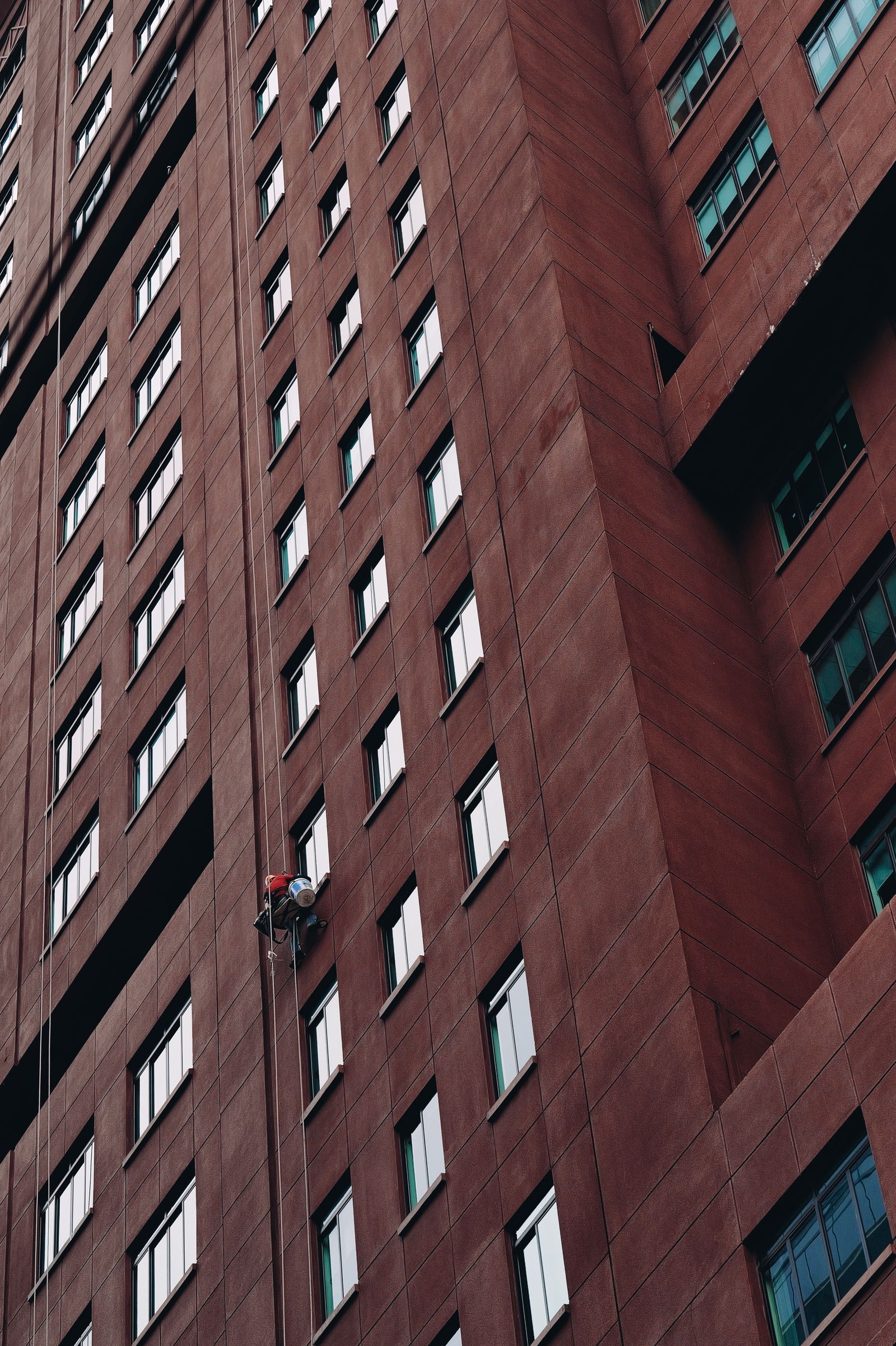
Define the cleaning task before comparing access methods
Method comparisons become misleading when the desired finish is vague. A controlled rinse can remove loose surface soil from compatible glass or cladding, while a soft-wash process uses selected chemistry, dwell, and low-pressure rinsing to address suitable organic or atmospheric staining. Contact glass cleaning can add agitation, edge work, and squeegee finishing. Mineral deposits, paint, oxidation, efflorescence, adhesive, construction residue, and damaged coatings may require testing or restoration. A safety plan should identify the soil, substrate, included area, exclusions, and acceptance standard before it decides how to reach the wall.
That definition keeps production pressure from changing the task in the field. If a mark remains after the approved rinse, the crew should not automatically increase pressure, strengthen chemistry, or move closer to the material. The plan can require a pause, photograph, and property discussion. It should also identify cracks, loose material, open joints, leaks, damaged glazing, unstable appurtenances, or electrical concerns that require review by the appropriate professional. Exterior cleaning is maintenance. It is not a facade inspection, structural evaluation, waterproofing diagnosis, preservation approval, or repair.
- Name the exact elevations, surfaces, stains, and expected finish.
- Separate rinse maintenance from contact cleaning and restoration.
- Record material uncertainties and test-area requirements.
- Set stop-and-report rules for unexpected facade or equipment conditions.
Compare drone, lift, pole, and ground access by the whole work zone
A drone may reduce the need to place workers at height for compatible wetting and rinsing, but it adds an aircraft operating area, launch and recovery points, visual-line-of-sight needs, hose or tether behavior, spray drift, and airspace authorization. A lift can provide direct contact, controlled agitation, detailed inspection distance, and tool access, but it needs stable setup space, trained operation, clearance, fall protection, and room for the support vehicle and outriggers. Water-fed poles keep work from the ground at moderate reach but can create handling, overhead, hose, and pedestrian issues. Ground application works well for accessible surfaces but cannot solve every recess or upper detail.
The best method can change around one building. A broad rear elevation inside a controlled private lot may support one setup, while a narrow sidewalk frontage requires another. A canopy underside and revolving-door glass usually need contact work even when an upper wall can be treated remotely. The comparison should include final finish, surface risk, worker exposure, public-space footprint, setup duration, water control, weather sensitivity, and contingency options. Choosing equipment because it looks efficient, without comparing those factors, can produce an unusable work zone or an incomplete result.
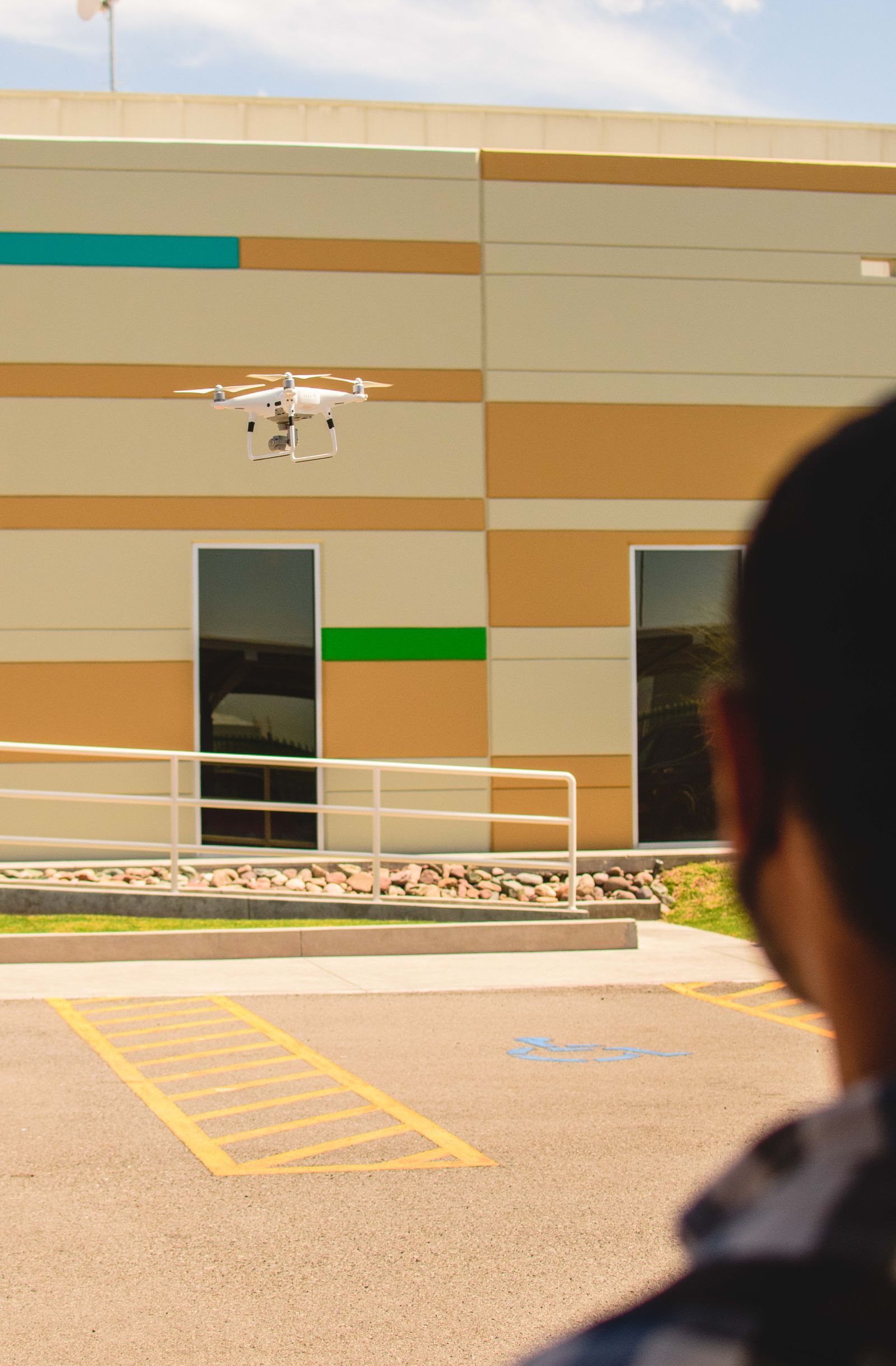
Make DC airspace authorization a go-or-no-go item
Washington is not a normal Part 107 operating environment. The FAA says the National Capital Region is governed by a Special Flight Rules Area within 30 miles of Ronald Reagan Washington National Airport and that drone operation in the 15-mile inner ring is prohibited without specific FAA authorization. Its DC guidance describes an online Access Program for experienced Part 107 and public-aircraft operators with justification and identifies additional TSA and FAA requirements. A property owner's consent, commercial pilot certificate, or low operating height does not erase those restrictions.
The safety plan should therefore list current authorization status, the exact approved location and time, applicable security instructions and limitations, pilot responsibilities, aircraft configuration, launch and recovery control, visual observers if used, weather limits, emergency actions, and a no-flight alternative. It should never imply that a quote guarantees approval. Restricted facilities, temporary restrictions, security activity, or conditions on the work date can add constraints. If authorization is absent, unsuitable, expired, or inconsistent with the cleaning setup, the drone portion does not proceed. The property can then evaluate an approved ground, pole, lift, contact, or deferred scope.
- Verify current FAA and security requirements for the exact operation.
- Keep property permission separate from airspace authorization.
- Define who confirms authorization and conditions before mobilization.
- Include a non-drone method or a clear postponement decision.
Draw the public-space and occupant-control map
DDOT states that public space includes the roadway, tree spaces, sidewalks, and alleys between street property lines, and that use of public space requires a permit where applicable. The safety plan should show whether equipment, a lift, a launch area, hoses, cones, a pedestrian detour, temporary curb use, or another control reaches public space. It should identify who determines permitting and traffic-control requirements and who confirms they are active. Existing cones, a loading zone, or a wide sidewalk are not automatic permission to occupy the area.
The same map should show doors, accessible routes, fire department connections, emergency egress, garage portals, loading docks, bike lanes, bus activity, outdoor seating, retail displays, security posts, air intakes, operable windows, balconies, terraces, and neighboring property. In Downtown and the Golden Triangle, pedestrian and curb activity may dominate the plan. Penn Quarter can add event timing and restaurant traffic. NoMa, Mount Vernon Triangle, Southwest Waterfront, and Capitol Riverfront properties may combine residents, offices, retail, garages, and construction. Georgetown and other historic commercial corridors can have narrow frontage and sensitive materials. These are planning prompts; the actual address controls.
Control workers, equipment, chemicals, and pressure hazards
OSHA identifies falls, falling objects, tip-overs, ejections, structural failures, electrocution, entanglement, and contact hazards among the risks associated with aerial lifts. Its guidance calls for trained and authorized operators, pre-start inspection, work-zone inspection, and appropriate fall protection. Those responsibilities remain with the employer and affected parties under the standards that apply to their work. The property-facing plan should still identify the proposed equipment, operator qualifications to be verified, inspection records, ground conditions, slope, overhead utilities, manufacturer limits, fall-protection approach, rescue considerations, and the boundary around workers and equipment.
Cleaning systems add pressure, hose, and chemical hazards. Connections and hoses should be inspected, routed away from uncontrolled traffic, protected where a crossing is approved, and depressurized under a defined procedure. Safety data, dilution, compatibility, personal protective equipment, landscape protection, eyewash or first-aid provisions, and spill response should match the product and application. A low-pressure facade process is not risk free, and a high-pressure stream should not be aimed at people, fragile assemblies, electrical equipment, open joints, or unknown surfaces. The plan should name who can stop application immediately when drift, leakage, equipment behavior, or public entry changes.
Trace wash water before choosing where controls go
DOEE explains that Washington has both a combined sewer system and a municipal separate storm sewer system. In the MS4, stormwater can reach local waterways without treatment. DOEE identifies soapy water from washing buildings or awnings as an example of a spill or illicit discharge concern and says wash water can be a pollutant. A safety and environmental-control plan should therefore follow water from the application point across ledges, setback roofs, canopies, scuppers, downspouts, pavement, landscaping, trench drains, curb inlets, and neighboring property.
The plan should record the drain system where known, the product and expected removed soil, containment or recovery controls, monitoring points, weather limits, and a proposed disposition route consistent with current requirements. It should not assume clear water is harmless or that every drain reaches the same system. Controls can fail when a berm redirects water toward an entrance, a drain cover bypasses, a recovery tank reaches capacity, or rain adds flow from the roof. The stop criteria should connect runoff performance to rainfall, wind, production rate, and occupied walking surfaces. Final reopening should include removal of residue, pooled water, hoses, and slip hazards.
Use weather and communication checkpoints instead of a rigid schedule
A forecast is only the first input. Wind can accelerate around corners or differ above the roofline, direct sun can dry chemistry too quickly, cold surfaces can change rinsing and slip risk, and thunderstorms can alter both aircraft and ground conditions. The plan should state measurable or observable limits for the selected equipment and product, then give the responsible crew members authority to pause. Drone manufacturer limits, lift manufacturer limits, chemical dwell guidance, public exposure, and spray control may produce different thresholds; the most restrictive relevant condition should govern the task.
Before work, the property and contractor can confirm the active elevation, access method, protected zone, occupant notices, water source, drain controls, weather, authorization or permit status, and emergency contacts. A checkpoint after the test area verifies material response and finish. Another follows any significant change in wind, rain, traffic, equipment, or scope. Closeout records completed zones, deferred work, photos, controls removed, remaining conditions, and any recommended contact cleaning or professional review. This creates a decision trail rather than a stack of generic forms.
Ask for a quote that includes the safety decisions
A useful proposal should describe more than square footage and price. Ask for included surfaces, expected finish, cleaning method, test requirements, access by elevation, contact-cleaning exclusions, water source, runoff assumptions, active work-zone controls, weather limits, documentation, and the conditions that would change the scope. For drone-assisted work, ask how the proposal remains conditional on current authorization and site feasibility. For lift work, ask about setup area, ground conditions, overhead conflicts, operator requirements, fall protection, and public-space needs. For every method, identify who coordinates occupants and who has stop authority.
Drone Building Cleaners can use the address, facade photos, approximate height, plans if available, material information, desired result, property calendar, water and drain details, and known security or permitting conditions to begin that comparison. The company cleans compatible commercial facades, upper glass rinse zones, ledges, parapets, canopies, roofline trim, sign bands, and entrances using a site-appropriate method. A request for a quote does not promise that every surface or drone operation is feasible. It starts the review needed to give the property a clear scope, a defensible access choice, and an operating plan that matches Washington conditions.